Showing posts with label War!. Show all posts

Wednesday, 31 December 2014

War Movie Month: Empire of the Sun (1987)

The Japanese invasion of China is an oft-forgotten aspect of WWII, but when you think about the idea of the small island empire invading its larger neighbour, you can definitely see how big the undertaking was. Combine this with Steven Spielberg's epic style of film-making and you get a pretty big and exciting film.

Jamie Graham (Christian Bale) is a privileged English boy living a life of luxury with his family in Shanghai, where his father owns a corporation. Soon after the Japanese attack Pearl Harbour, they invade Shanghai, leading to the separation from his parents. Left wandering around the city after leaving his home due to starvation, he is saved by Basie (John Malkovich), an American sailor. They are both eventually captured by the Japanese and sent to Soochow Creek Internment Camp. Jamie, now named Jim by Basie, finds a father figure in Dr. Rawlins (Nigel Havers) and runs a successful trade network that even includes some of the Japanese officers.

Spielberg's bigger picture really does come into play here. There are many scenes with hundreds of extras that blow my mind away. They're definitely something that doesn't get done today, massive groups of extras would just be added in digitally in contemporary films. There are also some great aerial battles, albeit watched from the ground through Jim's youthful eyes, and these are a wonder to watch.

I'm a little disappointed that treatment of the people living in the internment camp isn't something that is covered too much in this movie. Japanese camps were well known for not having the best living conditions, but again we watch this movie through the eyes of a 12 year old boy. Anyway, this is something that Spielberg portrayed much better in Schindler's List. Spielberg does also throw in a small group of scenes with young Japanese pilots training for kamikaze missions. These culminate with a scene of Jim singing the Welsh lullaby Suo-Gân as they fly off on their mission.

Christian Bale is more known for his roles as Batman and Bateman, but his skill as an actor started at an early age. He was 12 when he got this part, he came recommended by Spielberg's then-wife Amy Irving. Young Bale had a certain innocence that was perfect for role and was capable of showing terror when it was needed. John Malkovich isn't as scary as he would become later on, such as his role in Being John Malkovich, and I find it weird that his character is revealed in a way as though we'd be surprised that it's him. He has a pretty distinctive voice and we hear him talk a fair bit before we see his face.

Supporting roles from Nigel Havers and Miranda Richardson help aid the main stars, but they're not entirely memorable. One of the better smaller roles is Dainty, a gang member of Basie's and played by a young Ben Stiller. In fact it was on this movie that he got the idea that would eventually become Tropic Thunder.

Verdict: A fantastic war film and a great introduction to Christian Bale.

Tuesday, 30 December 2014

War Movie Month: Schindler's List (1993)

"Whoever saves one life, saves the world entire"

Unless you've been living under a rock for the past 75 years, you're probably quite aware of the Holocaust and the horrific events surrounding it. However, you may not be aware of the story of Oskar Schindler, a rich industrialist that used his production empire to save the lives of some 1,200 Jews from certain death. His astounding work is the focus of Steven Spielberg's film, Schindler's List.

At the beginning of World War II, in the Kraków Ghetto, Oskar Schindler (Liam Neeson), a businessman and member of the Nazi Party, opens an enamelware factory, hiring Jewish workers because they are cheaper labour. He appoints a local Jewish man Itzhak Stern (Ben Kingsley) as his managerial assistant, all the while, Oskar maintains his links with local officials and members of the SS, bribing them to allow his workers to stay. A notorious womaniser and drinker, Oskar maintains a high profile and lavish image whilst many of his workers struggle to survive.

With a new concentration camp to be constructed in Kraków, SS member Amon Goeth (Ralph Fiennes) is put in charge of the project. Goeth is relentless in his anti-Semitic actions, often referring to the inhabitants of the Ghetto as "rats" and executing people randomly for his own amusement. When Schindler meets Goeth, he forms a pseudo-friendship with the man, in the hope that he will prove useful down the line. Indeed, towards the end of the war, when Goeth is ordered to send the remaining Jews for extermination, Schindler is able to bribe him into letting him keep his workers. The names of these workers and their families, compiled by Schindler and Stern to send to Goeth, would become known as "Schindler's List".

The film was finally made, largely thanks to Holocaust survivor and 'Schindler Jew' Poldek Pfefferberg, who had been attempting to get the Schindler story made into a film for years with no success. That is, until he met Australian author Thomas Keneally. Keneally wrote the Booker Prize-winning novel Schindler's Ark, which inspired Spielberg to make Schindler's List. Keneally said that what drew him to the story was Schindler's flawed nature,"the fact that you couldn't see where opportunism ended and altruism began". Schindler is portrayed by Neeson as complex and difficult to read, but undeniably charitable. Whether his plan was always altruistic, or simply due to the transformative experience of a country deep in war, his actions permeate a sense of hope from a dark period in history and are presented through Spielberg's poignant biopic.

Presented almost entirely in black and white, the colourless imagery of Schindler's List depicts a low point in recent human history. Spielberg and his regular cinematographer, Janusz Kamiński felt that the black and white gave the film a documentary style, which they tied together with plenty of handheld shots, making it less subjective. However that doesn't make it any less of an emotional viewing experience. Certain elements of shots, including the flame from candles and the red coat worn by a little girl, were left in colour. This involved a painstaking process where the colour shots had to be greyed out, frame by frame, leaving just the desired colour. The result, given the symbolic nature of these moments, is really very moving. The musical score by, you guessed it, John Williams (Spielberg's go-to composer) seems very fitting for the sombre tone of the film and won Williams an Academy Award, one of seven awarded to the film. Schindler's List sends you through a barrel ride of emotion, and much of this is down to its superb presentation.

Spielberg couldn't have chosen a better cast with the then relatively unknown (now major action star) Liam Neeson leading the way as Schindler. Neeson's performance is crucial in creating a character that isn't simply a messiah, but rather has uncertain goals and personal demons to grapple with. Kingsley is astoundingly good as the intellectually brilliant Itzhak Stern, his performance is honest and often touching. Fiennes is very fierce as Goeth, which must have been an emotionally exhausting character to play given his horrific and heartless actions. Supporting them are Caroline Goodall as Schindler's wife Emilie, Jonathan Sagall as Poldek Pfefferberg and Embeth Davidz as Helen Hirsch, the Jewish girl that gained Goeth's admiration's whilst working as his maid.  

Schindler's List is an honest look at the Holocaust, and the man that combated it with his power. Through all the haunting imagery rests a positive message of hope that leaves you both ready to mourn history's victims and celebrate those that try to make a difference. A movie for humans.

Saturday, 27 December 2014

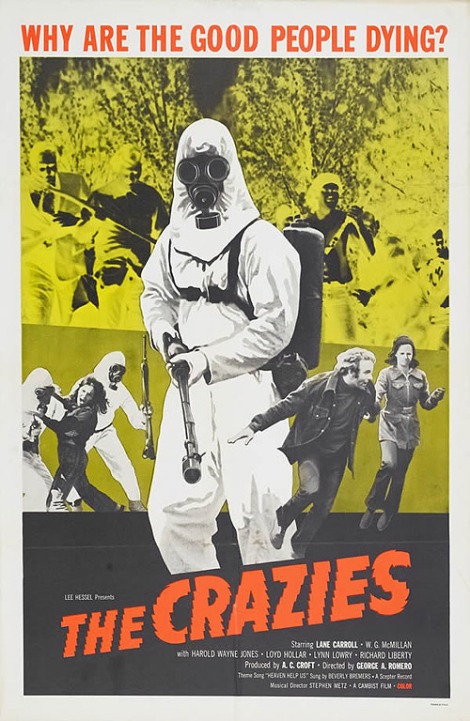
War Movie Month: The Crazies (1970)


In 1969, George A Romero and Image Ten Productions revolutionised the horror genre with the reinvention of a classic movie monster. Following the eventual success of their indie film, Romero endeavoured to continue to make other small independent films of various genres, though in 1972 he revisited horror in a slightly different manner. Zombies embody one side of social horror, though Romero made a film wherein the military and even one's next door neighbour was just as frightening. Unfortunately, it was also a critical and commercial flop that was even remade by Brett Ratner in 2010.


The Crazies is set in Evans City, a small town in rural Pennsylvania, and opens on two young children watching their enraged father tear up and then proceed to burn down the family home while they and their recently murdered mother are trapped inside. Local firemen David and Clanker arrive with their retinue to subdue the blaze and they see the father handcuffed in the back of a police car, still muttering and mad. David and Clanker are both Vietnam veterans, though David served in the Special Forces Green Berets, and the two attempt to escape town with David's pregnant nurse wife Judy and a few other residents. Political and military leaders are concurrently arguing at how to contain the outbreak of a bio-chemical weapon after a military plane crashed near Evans City.The name of the chemical agent is Codename: Trixie and it drives the residents into a murdering frenzy, and so martial law is declared and a military force wearing white military hazmat suits invades and surrounds the town in an attempt to quarantine the effect of Trixie. Inevitably and violently, the infected residents fight back.

The Crazies is a not so much a war film in content, but in context. Vietnam was the first televised war, and took place right in the middle of two vital decades of social and cultural revolution in the West. But incidents such as the Kent State massacre, where the United States National Guard (a volunteer military force for deployment on US soil) shot at unarmed college students in Ohio, killing four, exacerbated matters domestically. Scenes such as this involved the first deployment of US troops against its own citizens and using deadly force in a century and had long-lasting cultural impact.  The Crazies is one of the first films to depict the American military in combat against its own civilian population as a large body, as opposed to individual villains. In particular, one scene involving a shootout between the military and enraged citizens of Evans City on a grassy hill next to a small woody area is particularly comparable to footage from Vietnam, sans the woman sweeping the grass with a broom.


Additionally, the film contains several scenes of the military violently and carelessly raiding congregations of people in churches, dance halls and even in their homes. In a montage of these moments, the soldiers detain a family including their crying infant. These scenes are undeniably stressful and act as an early incarnation of the infamous "Ghetto Holocaust" scene at the beginning of Romero's classic Dawn of the Dead. Viewing it from 2014, these raids is repeated in real life time and again, but in scenes such as the infamous photo of Elian Gonzalez, it's particularly evident. It's this imagery, with the argumentative and eventually ineffectual nature of the government within the film that makes Romero's film so effective as a searing social commentary. And ultimately, the film leaves the viewer unable to distinguish just who the Crazies are, the military, the infected or both.

The Crazies is full of flaws in only the way that a film made in small-town Pennsylvania, on a budget of $275,000, and involving dozens of non-professional actors, including the leads, can be. But no-one does this kind of social horror like Romero, and each scene is underrated in its iconography. There are some awful sound issues, that may just be because of the time and the equipment, but nevertheless it creates an awful jumbled mess, that can and does work at times. And the less said about the acting, the better, though two of the actors appear in later Romero films (Richard Liberty as Artie in The Crazies and Doctor "Frankenstein" Logan in Day of the Dead, and Richard France as Doctor Watts and Doctor Rausch, respectively). This is a lost classic in the canon of Romero's films, though it certainly is rough going. But it is very easy to see George Romero's talent and his limitations in making this film.

Thursday, 25 December 2014

War Movie Month: Joyeux Noël (2005)

Historical war films, like Lawrence of Arabia or Bridge on the River Kwai, use the specific stories that they are based on to tell a story. Sometimes these films can be accused of being full of inaccuracies of what did or didn't happen. I think that's why films about widespread events appeal to me so much, no one can come along and say that didn't happen.

Joyeux Noël tells a fictionalised account of the Christmas Truce of 1914. During the stalemate that is happening on the front line, soldiers from the German, French and Scottish armies decide to take part in a ceasefire that lasts into Christmas Day. Among the soldiers is German tenor Nikolaus Sprink (Benno Fürmann), his wife Anna Sörenson (Diane Kruger), Scottish priest Father Palmer (Gary Lewis) and French Lieutenant Audebert (Guilliame Canet). During the ceasefire, the men play football, share stories and drink with one another.

While troops across the Western Front all did enjoy a ceasefire on Christmas Day 1914, this particular story does have a tiny bit of truth to it. Crown Prince Wilhelm of Germany did send a tenor to the front to cheer up the troops and the French did applaud his singing, but that's about as far as the reality stretches. The battle scenes early on also do capture the futility of trench warfare.

This movie isn't really a performance driven film, instead focusing on the breaking down of barriers during wartime. That doesn't mean that there aren't standout performances, however. The three leaders of the troops, Alex Ferns, Guilliame Canet and Daniel Brühl (the German lieutenant) all give stellar performances, as does Gary Lewis and Dany Boon, who gives some much needed comic relief.

Verdict: If you're going to watch any Christmas movie this year, I would suggest you do away with watching Die Hard, Christmas Vacation or even The Muppets Christmas Carol and watch a movie that has some feeling to it.


Tuesday, 23 December 2014

War Movie Month: The Deer Hunter (1978)

Post traumatic stress disorder is one of the side effects of war that can destroy people's lives (that's not including death, destruction of property and pure terror that are also products of war). Michael Cimino's war drama The Deer Hunter is a film that succinctly looks at the trauma (albeit fictional) that soldiers go through to end up with PTSD.

The movie follows three Russian-American men, Michael (Robert De Niro), Nick (Christopher Walken) and Steve (John Savage), all from the same small West Pennsylvania steel mining town, who go off to fight in the Vietnam War. Whilst there, they are captured and made to play Russian Roulette. They escape and Michael returns to America to find that Steve has been terribly injured and Nick is nowhere to be seen.

Michael feels distant and removed from the town he has come back to. This is something that a lot of soldiers have reported feeling once they return from a warzone. This is nothing compared to how the character of Steven feels. Not only is he mentally scarred from the torture that he went through, but he is ashamed of the injuries that he sustained during the war; the loss of both legs, and refuses to see his wife. Nick becomes so unstable that he is unable to recognise Michael when he finds him in an illegal betting ring where the contestants play Russian Roulette.

One of the most remarkable things about this movie is that it was shot all on location. The small mining community of Clairton is comprised of many mining communities in the US and the Vietnam scenes were shot in Thailand, the first movie to shoot a Vietnam War film in that country. Probably one of the most amazing set pieces is the first act of the film, which is Steve's wedding. This was shot in St. Theodosius Russian Orthodox Church using an actual priest. This first act goes for an hour and does an amazing job at setting up the characters.

Robert De Niro is as exceptional as you would think in this movie, being on top of his game in the 70s. But his performance is hardly the most captivating. Christopher Walken winning an Academy Award might seem a strange and humourous idea for modern audiences, especially when all you can picture is his strange and signature style of talking, but back in 1978 he didn't really speak like he does now, well not as much. He gives a haunting performance as Nick (short for Nikonar) and is truly deserving of the award he won. The film features a young Meryl Streep who is nearly unrecognisable and this is John Cazale's (The Godfather, Dog Day Afternoon) final film before succumbing to cancer, which he had during shooting.

Verdict: The Deer Hunter is a long slog of a movie, but is very rewarding in many ways. Fantastic performances from both De Niro and Walken.

Monday, 22 December 2014

War Movie Month: Grave of the Fireflies (1988)

The effect of war on a civilian population, particularly children, is a difficult, yet  important subject and, one which is explored in Isao Yakahata's Grave of the Fireflies, A Studio Ghibli classic.

Seita (Tsutomu Tatsumi) and Setsuko (Ayano Shiraishi) are siblings living in Kobe towards the end of World War II. After the U.S firebombs the city, much of Kobe is left in ashes. The children's mother (Yoshiko Shinohara) is horribly burnt in the attack, and soon the children are left on their own in the world. They live with an aunt (Akemi Yamaguchi) for a while but after she accuses them of not pulling their weight, they move into an abandoned shelter by themselves. Whilst the war continues around them, they scavenge together what food they can find, and light the cavernous shelter with fireflies. 

When picking out films to review for the war month, Grave of the Fireflies didn't immediately stand-out. But the effect of a Total War such as WWII on civilians, many of which were caught up in the almost-necessary patriotism of the time, is just as important as those fighting on the front, but unfortunately not many films attempt to tackle with the issue. Grave of the Fireflies, however, doesn't hold back in this respect. The tale of this brother and sister, stuck in the middle of a war, with just each other, remains one of the most moving stories I've encountered in a film, especially in animation.  It's an emotionally challenging film to watch and as such, has a profound effect on each viewing.


Artistic styles in animation, particularly anime and the works produced by Studio Ghibli, differ greatly, and are not necessarily the most ideal medium to deliver an honest look at the horrific nature of war, but with Grave of the Fireflies, there's a certain gracefulness to the scenes, that connect the characters with the audience on an emotional level, and in turn, make the story of these two lovable siblings, attempting to survive in the most trying of scenarios, just that much more heart-breaking.

Having only ever viewed Grave of the Fireflies in Japanese, which sadly, I don't understand (thank you subtitles!), it's still easy to appreciate the nuances of the language, particularly when applied to these two innocent children. Tatsumi brings a boyish charm to Seita which draws attention to the fact that he's really still just a kid, but is left responsible for his fragile little sister, and Shiraishi (herself only six when making the film) perfectly emphasizes the tragic purity of Setsuko.

Grave of the Fireflies is simple in form, but delivers a beautiful and harrowing tale, a heart-breaking eye opener to the substantial effect of war on civilians, and as such, ranks highly in the great anti-war films. It is, in my opinion, the greatest work produced by Studio Ghibli thus far, and is certainly a contender for the most powerful animated feature ever conceived. A truly moving piece of cinema.


Critic Roger Ebert shares his views on 'Grave of the Fireflies'

Friday, 19 December 2014

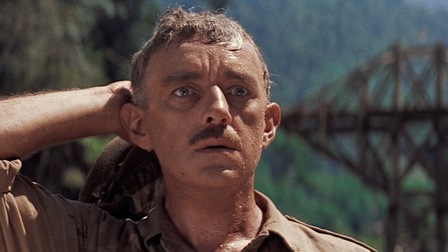
War Movie Month: Bridge on the River Kwai (1957)


The Second World War is one of the most revisited and re-imagined real-life scenarioes in human history and with the benefit of hindsight, the Greatest of Wars inherently tells stories of the best and worst of humanity, heroes and villains, the destruction of Europe before it rebuilds itself for the second time in half a century, the destruction and rebuilding of Japan in the wake of the single most devasting weapon ever created, millions dead and injured, and the restructuring of Western society and its norms.  Bridge on the River Kwai is an essential piece of cinema, has been for nearly 50 years, and it tells of a bizarre story of heroism and pride that is emblematic of the British spirit, and how that pride can blind as well as give strength.


In the Pacific Theatre, Veteran British Officer Lieutenant Colonel Nicholson (played by Sir Alec Guiness, in his most famous role outside of the robes of Ben Kenobi in Star Wars) leads his troops into the Japanese-run Burmese prison of Saito (Sessue Hayakawa). Saito is a spiteful, proud and foolish warden, easily insulted and easier mocked, and as was the reality of the Pacific War, was incredibly cruel to his prisoners. As Nicholson's men arrive at Saito's prison camp they are all ordered to work on the construction of both the Burma railway and a bridge for said railway over the Kwai River. Nicholson refuses to include his officers in this manual labour and Saito forces them to remain standing at attention for a full day in the intense tropical heat before confining them to small and restrictive huts. This causes unrest among the prisoners and longtime US Navy prisoner Shears (William Holden) uses this as his opportunity to escape the camp. As Shears is later coerced to liberate his comrades from Saito's prison camp and destroy the bridge by the British authorities in the area, Nicholson intends to use the bridges construction as a tool to maintain his men's pride, morale and cohesion as a unit. But in doing this, Nicholson himself becomes so enamoured and proud of their work that he becomes oddly protective of his precious bridge, a change that brings his downfall.


Based on the novel of the same name by Pierre Boulle (who also wrote the Planet of the Apes novel), Bridge on the River Kwai is one of the most influential films by the legendary David Lean (director of Lawrence of Arabia, Doctor Zhivago, Brief Encounter). The film captures the dangerous, though gorgeous jungles of South Asia (filmed in Sri Lanka) in stunning wides and its nearly omniscient presence in mediums, in no small part because of Jack Hildyard's cinematography. The film covers the threat, horror and humanity of war with little to no actual battle sequences, though the few moments of action and violence are both thrilling and engaging. Sir Alec Guiness is the perfect vehicle for the phrase "the pride before the fall", as his stoicism, defiance, and his"stiff upper lip" is beyond endearing through the tortures he experiences under the cruel and vain Saito. His war of the wills with such an authoritarian as Saito is made that much more bold by usurping the Japanese captains authority from such a state of physical inferiority, literally commanding respect, and later the Japanese soldiers in addition to his own.


Bridge is slow and deliberate, in its pacing, in its performances, and quietly charming, with director Lean and actor Guiness both at the top of their game. Bridge on the River Kwai is certainly and rightfully the classic war film it is claimed to be.


Thursday, 18 December 2014

War Move Month: Life Is Beautiful (1997)

A comedy set during the holocaust is an idea that might make a few people uncomfortable, but Roberto Benigni's 1997 tragicomedy walks a fine line between being hilarious and showing one of the darker events of the 20th Century.

Guido (Benigni) is a free spirit who moves from the country to work in the city with his uncle (Giustino Durano) at a big hotel. From his first day in the city, he falls in love with Dora (Nicoletta Braschi) and they have a tumultuous courting period. A few years later they have a son, Joshua (Giorgio Cantarini), and Guido owns a book store. Around this time, Mussolini and Hitler are engaged in the European War and all the Jews are being taken to concentration camps. Guido and Joseph are among these people sent, along with Dora, who despite not being Jewish, pleads to go on the train. At the camp, Guido keeps Joshua's spirits high by distracting him with games.

This movie provides a fun and light vibe with lots of great gags that will make you laugh, but it has moments of tension, suspense and sheer horror. We are reminded at times of the anti-Semitism that was felt throughout Central Europe, by attacks on Guido and his uncle. During the scenes in the concentration camp, we are shielded from a lot of the atrocities committed, almost seeing things through the filter that Guido presents to Joshua. However, we do see the horrors of the gas chambers and one misty night when Guido is carrying a sleeping Joshua through the camp he encounters an enormous mound of dead bodies. Rather than scream at the horror he has just seen, he backs into the mist for fear of waking his son.

Benigni's performance in this film is very convincing. The comedian's slapstick approach to the film is light-hearted and a lot of the gags in the first half of the film when he is trying to get Dora's attention are hilarious and well played. He is also great when it comes to the serious scenes, showing true horror and fear when he hears what is happening to Jewish people. Benigni's actual wife Nicoletta Braschi plays Dora and the chemistry is believable because it is real. Her performance is heart-wrenching at times, especially when she hears what happens to the children of the camp. Also Giorgio Cantarini is talented as Guido's son and it's disappointing that his career didn't extend past a small role in Ridley Scott's Gladiator.

Verdict: An incredibly touching and poignant film that will undoubtedly make you laugh and cry in a single viewing.

Wednesday, 17 December 2014

War Movie Month: Saving Private Ryan (1998)

Saving Private Ryan, one of several Spielberg war films that we'll examine this month, has been heralded for its incredibly realistic portrayal of combat, and for its harrowing performances from cast members, including of course, Tom Hanks. However it has also come under the scrutiny of veterans and filmmakers alike. It's a film that can be quite unnerving to watch, but ultimately can stand up against some of the greatest war movies made thus far.

After a present-day prelude, we are taken back to June 6th 1944, the D-Day invasion on Omaha Beach. Captain John H. Miller (Tom Hanks) leads the 2nd Ranger Battalion up the beach and toward German defences as severe carnage ensues around them. Several days later, after the situation is more controlled, Miller learns that his company is to find Private James Ryan (Matt Damon), a missing-in-action soldier and the last remaining of four brothers fighting in the war. 

Saving Private Ryan is well known for its realistic representation of combat conditions, especially in the opening scene of the landing on Omaha Beach. Just as Oliver Stone aimed to represent his experiences in Vietnam in Platoon, so did Spielberg strive for accuracy in his representation of the landings. The 27 minute sequence cost millions to make and wasn't even storyboarded, with Spielberg preferring to move the camera freely to capture the action. The horrific details of seasickness, machine-gunfire, bloody water and limbs being torn off make for some difficult viewing, with some WWII veterans regarding it as the most realistic representation of the events that they have ever seen. The power of the film rests in this realism, and the relatable characters  that are placed within this insane situation, on a controversial mission that will cost several lives just to save one. If I have one criticism, it's that at times, it becomes overly patriotic to the point that it can come across as less about the men using their allegiance to grapple with the situation, and more as a justification for their actions.


Whilst receiving critical acclaim both on release, and since, Saving Private Ryan has also had it's critics, one of which being the aforementioned filmmaker and veteran, Oliver Stone, who believed the film's patriotic and violent representation of WWII may have inadvertently fuelled America's love of war. Although Brian De Palma (Scarface) suggests otherwise, stating that the level of violence is Spielberg "trying to show something about the brutality of what happened". Be that as it may, it's an interesting point about the influence of a film on society. Personally, I have always found the battle scenes so intense that they put the horror and significance of such a conflict into perspective.

Saving Private Ryan has a unique, slightly-soft and desaturated look, with a heavy amount of film grain, reminiscent of WWII-era newsreels. Many of the battle scenes use a slight 'shaky-cam' effect which is never particularly disorientating but helps to place the audience in the action. Janusz Kamiński again collaborated with Spielberg as DP on the film, after he utilised some quite stunning cinematography in Schindler's List (which we'll look at later in the month).  Kamiński won Best Cinematography for Saving Private Ryan. Working together with the images is a screaming sound stage which adds to the intensity of the battles. Bullets flying left, right and centre, shells whistling over-head, it can be horrifically unnerving and rightfully earned the film the Academy Award for Best Sound Design.

The fury of the battle scenes is put into perspective by the poignant performances from the cast. Hanks is magnificent at portraying characters that are inherently human, and as Miller, he conveys the challenging and conflicting nature of leadership. The battalion is full of intriguing characters but some standouts include the loyal Technical Sergeant Horvath (Tom Sizemore) and the sharpshooter Private Jackson (Barry Pepper), who frequently reads verses from the bible whilst pointing his sights at the enemy, a perfect representation of the conflicting nature of warfare.

Saving Private Ryan is a strong war film that uses realism to confront the horrific nature of warfare. Its tale of sacrifice and heroism may be overshadowed by an overly-patriotic message but the chilling scenes and heartbreaking performances elevate it to another level. 

Monday, 15 December 2014

War Movie Month: Apocalypse Now (1979)

Francis Ford Coppola's epic (and when I say epic, I mean bigger than epic) war film about Vietnam is considered one of the greatest films ever made and after rewatching it for the I-don't-know-how-many time, I am still blown away by the impact it has on me. The film has a storied production, it took 16 months to film and many years to edit, but the film has also influenced pop culture in a way that no other film before or since has done so. The main theme at play is the insanity of war and how that insanity affects the soldiers who fight.

Captain Ben Willard (Martin Sheen) is sent on a mission up the Nung River, where he must locate and kill Walter E. Kurtz (Marlon Brando), a rogue US Army Colonel. Willard is escorted up the river in a Navy PBR led by Chief (Albert Hall) and crewed by famous surfer Lance (Sam Bottoms), Chef (Frederic Forrest) and Mr Clean (Laurence Fishburne).

Aside from being one of the greatest films ever made, Apocalypse Now is also one of the biggest films ever made, not in terms of budget, but more physical scale. Some of the set pieces are truly awe inspiring. There is of course the famous scene in which an air cavalry unit led by Lieutenant Kilgore (Robert Duvall) assaults a river village while Wagner's "Ride of the Valkyries" is blasted from loudspeakers. But rewatching it this time I noticed a few others which really amazed me and I've seen this movie on the big screen. There is a huge night scene where the crew come across an American outpost under attack from Vietnamese soldiers. The number of explosions and the performance of Sam Bottoms in this scene is amazing.

But in general all the performances in this movie are among the best ever committed to screen. Sheen gives the most convincing performance as a man who is obsessed with achieving his objective, but eventually becomes obsessed with the man he is assigned to kill. Despite all the horror stories about Marlon Brando and his actions on the set of the film, he actually gives a great performance, despite only being in the film for close to twenty minutes. Frederic Forrest gives an amazing performance as Chef, a New Orleans chef who was drafted and chose to be in the Navy because he heard they had the best food. He is probably my favourite character out of the group.

Laurence Fishburne is also remarkable in this film, although I find the story of his casting even more remarkable. He actually lied to Francis Ford Coppola and said that he was 17 when they cast him, but it turns out that he actually 14 when they shot the film. Despite this, his skill at that age is amazing. The other performance that is hard not to talk about is Dennis Hopper's. Hopper plays a character known only as the photojournalist. He lives in the compound with Kurtz and is hypnotised by the colonel's teachings, although when I watch his scenes, I can't help but feel he acts as if Coppola was actually a character in the film (Coppola by the way does have a cameo in the film as a director of a news story).

I would really recommend watching the documentary Hearts of Darkness: A Filmmaker's Apocalypse, made by Coppola's wife Eleanor during the filming of the movie. It covers everything from the immense damage caused by storms to the film sets to the heart attack that Martin Sheen suffered during the production and also a very creepy interview had with Coppola, who is on the verge of insanity.

Like Das Boot, Apocalypse Now has two versions available and I will say to watch them both. There is the the original theatrical cut, which is a clear and concise war movie and then there is Apocalypse Now Redux, which I watched for this review. It adds about 47 minutes of extra sequences including a big scene where the crew on the boat encounter a French family who have been living in a mansion from back in the old French colonial days of Indochina and a slightly over the top scene involving Playboy bunnies who appeared earlier in the film. Unless your unfamiliar with the history of south-east Asia or just like seeing naked ladies, I would recommend watching the original version more.

Verdict: Apocalypse Now is the pinnacle of big budget movies (for the 70s anyway). It has inspired more pop culture moments than anything else and will continue to do so.

Friday, 12 December 2014

War Movie Month: Breaker Morant (1980)


"Shoot straight you bastards. Don't make a mess of it."

So many war films show us the horrific violence of conflict, but few deal with the hypocrisy that exists within the military, particularly their systems of law. One such feature is the Australian new wave film, Breaker Morant, directed by Bruce Beresford.

One of the few films set during the Boer War (The Second Boer War for you history hipsters), Breaker Morant is the true story of the court-martial of Harry "The Breaker" Morant (Edward Woodward), Peter Hancock (Bryan Brown), and George Witton (Lewis Fitz-Gerald). Charged with murdering Boer prisoners, as well as a German missionary, their defence (Jack Thompson) is given just one day to prepare before the trial commences.

The film centres around the trial, with flashbacks to the war, and scenes within the prison inter-cut throughout. Given the low-budget of Breaker Morant, it manages to cover a surprising amount of detail, with the battle scenes being particularly impressive, thanks to some creative cinematography from prolific Australian DP Donald McAlpine (Predator, Romeo + Juliet). Though it cannot be denied that this is a dialogue-driven film, and as such, is probably not the sort of feature that viewers looking for action war movies would want to see. The story of the trial is certainly interesting and the intercutting prevents it from becoming too stagnant, but the fact is that some of the film is a little bit dry.

However, it cannot be said that the performances are in any way humdrum, with Edward Woodward leading the charge with a memorable depiction of a respected and complex man, who has come to be considered a hero in Australian society. Woodward is powerful in his attempts to defend himself and his men, and emotional when confronting the inevitable. Jack Thompson has a similar presence as their defence council, and Brown & Fitz-Gerald are able to perfectly convey the naivety of the younger two accused. Another standout is revered Australian actor Charles 'Bud' Tingwell, who plays Lt. Col. Denny, presiding over the trial with a stern presence.

The key to Breaker Morant is the details. The dialogue of the trial and the alternating scenes form an impressive and intriguing depiction of these real-life events, which has seen the film go down in the history books as one of Beresford's best, and by far, one of the most memorable Australian war films. Just don't go into it expecting an action packed explosion-fest.


Thursday, 11 December 2014

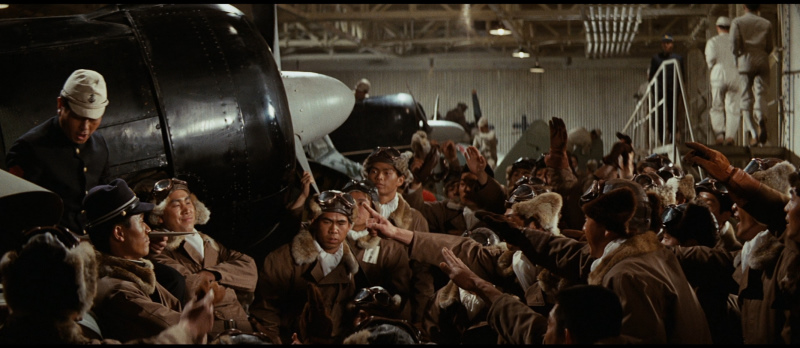
War Movie Month: Tora! Tora! Tora! (1970)


Tora! Tora! Tora! is a war film with a difference. From story structure, to character development, to production methods, in these ways and more it sets itself apart in its decisions to accurately portray both sides of the lead-up to the devastating attack on the US Navy's Pacific Fleet stationed in Hawaii. The title comes from the Japanese code word that was sent from the fighters back to their own command to confirm that complete surprise had been achieved. The film stars Jason Robards, Martin Balsam and So Yamamura.


"It all looks good on paper. But for God's sake....that's not a paper fleet out there!"


From the outset the film claims that "All of the events and characters are depicted to historical fact", and with the level of military muck-ups, diplomatic dog-fighting and political pissing contests. it's not easy to dismiss that claim. Summarising the narrative of this film is a difficult task as this is a movie that has no protagonist and the plot can too easily be stripped back to following the lead-up to the attack, and little else. But within that are many elements of espionage, paranoia and delusion. After over 90 minutes of build-up the film climaxes with a stunningly photographed action-disaster sequence of the December 7th attack.

Produced as a joint American-Japanese venture in order to accurately portray the conflict from both perspectives, the film was intended to be a revisionists accounting of the infamous moment as first proposed by former Twentieth Century Fox executive, Daryl Zanuck. The film itself was split into two developments divided by country. Legendary director Akira Kurosawa was originally attached as the director of the Japanese side, spending two years assisting in developing the film. He lasted two weeks into the project before getting himself fired, after learning that David Lean would not be the director of the American segments, a condition which was important to Kurosawa. In his stead, Toshio Masuda and Kinji Fukasaku directed the Japanese segments, and Richard Fleischer the American. Fukasaku is most remembered for the Battle Without Honour or Humanity series and the Battle Royale films. Masuda for his 82 films that broke Japanese box office records, and Fleischer for Soylent Green, Fantastic Voyage. and 20,000 Leagues Under the Sea. Less than one minute of the final cut contains Kurosawa's footage. Shockingly, this production took four years of development but its budget was only $25 million dollars. The film was a hit in Japan but a miss in the US.


The film's climax is really the stand-out point of the film, as well over 30 minutes of destruction and dog-fighting should be. It contains beautiful high-altitude cinematography, explosive set pieces, dozens of extras, stuntmen and real US military personanel, actual plane and ship replicas and mock-ups exploding, crashing and battling. Many of the stunts performed in this sequence are breathtaking and undeniably in presence in their execution and presentation.


Truth be told, Tora! Tora! Tora! is a mostly dry film, filled with detailed political and military machinations. The only real emotional connections come from the audiences own historical knowledge, the only real tension from the approaching date and time of the attack. In this regard, Michael Bay's Pearl Harbour  succeeds in it's aims to create an emotional connect with characters within the event rather than the event itself. And that's mainly because the event is so brilliantly captured that it is amazing, instead of merely horrific.The editing at times can cause confusion, as one must keep track of over a dozen people who appear in similar looking rooms in Hawaii and Washington, as well as Tokyo and the Pacific. Not many films can cause such confusion through timezones and a sore lack of supplemental establishing shots. Tora! Tora! Tora! is a war film for those with an eye for historical fact over entertainment and art, though the finale is unmissable.

Wednesday, 10 December 2014

War Movie Month: Letters From Iwo Jima (2006)

This film and companion piece to Flags of Our Fathers (2006) is one of the more technical films on this list. Although it does have a message that war is futile, it tends more to focus on people that overarching themes. More than Flags of Our Fathers, it focuses on the Battle of Iwo Jima, rather than the aftermath and impact the battle had on the overall war.

The movie follows three main characters. Saigo (Kazunari Ninomiya) is a lowly baker conscripted to the war, General Kuribayashi (Ken Watanabe), who has been assigned command of the island, and Ryô Kase), a former elite commando who has been sent to the island of Iwo Jima as punishment. These men provide narration in the form of letters sent home to their loved ones.

This is a much more technical film than Flags of Our Fathers. Rather than push some message about war and how bad it is, it presents a depiction of how a battle took place, complete with specific references to troop movements and numbers. That doesn't mean this film doesn't have an emotional core to it. Instead, I feel like I can connect to the human fears of that are felt during battle and war in general.

I suppose what the big thing for me about this film is that growing up in a Western society that fought against Japan in WWII (in fact my hometown was even attacked by the Japanese), I grew up with a different image of how Japanese soldiers were. Before I saw this film I always saw Japanese soldiers as ruthless killers who would rather die than surrender the motherland to the Allied troops. This film made me realise that the soldiers fighting for Japan were just like the soldiers fighting for Australia or America, they were conscripts who had no desire to fight. In one flashback, we find out that Saiko has left behind a pregnant wife who wants their child to grow up with its father around.

This film's visuals are also noteworthy. Tom Stern's washed out palette makes the film look almost black and white. This imagery intensifies the weariness of the Japanese soldiers as they make their final stand on Iwo Jima. Apart from some shots of American battleships recycled from Flags of Our Fathers, this film employs very little CGI, which is something of a rarity in modern war movies. This makes for a more genuine feeling film.

Ken Watanabe has the biggest challenge of the three lead actors as he is playing the only real person. Watanabe read the letters written by Kuribayashi during the battle and has been praised for his accurate portrayal of the man. Ninomiya is fantastic as Saigo, a character who I found very relatable for his everyman qualities.

Verdict: Eastwood has directed a remarkable war film that makes history accessible but also provides great entertainment for war film buffs.

Tuesday, 9 December 2014

War Movie Month: Lawrence of Arabia (1962)

"Mr Dryden: Lawrence, only two kinds of creature get fun in the desert: Bedouins and Gods, and you're neither. Take it from me, for ordinary men, it's a burning, fiery furnace.
Lawrence: No Dryden, it's going to be fun."

T.E. Lawrence was certainly no ordinary man. With Middle East interests from an early age, he later entered British Army Intelligence and served as the political liaison officer in a revolt against the Turks during WWI. He was the titular focus of today's war classic, the seven Academy Award winning Lawrence of Arabia, directed by David Lean (Bridge on the River Kwai, Doctor Zhivago).

Beginning in a similar fashion to Gandhi, T.E. Lawrence (Peter O'Toole) is killed in a motorcycle accident in 1935. At his funeral, a reporter is digging around to find out about his past. Cue wartime epic movie. During WWI, the British are allied with Prince Faisal (Alec Guinness), who is revolting against the Turks. The eccentric Lawrence is sent to investigate his chances of victory. He is advised by Colonel Brighton (Anthony Quayle) to simply observe, but when Faisal takes kindly to Lawrence, he assists the Prince in launching a surprise attack against the Turks. The rest of the film sees Lawrence push a guerrilla war against the Turks, with train explosions and huge clashes between Arabic forces; it's an incredibly interesting story, and is generally considered to be historically accurate, with much of the film being based on Lawrence's own book, Seven Pillars of Wisdom.

Lawrence of Arabia is one of the many epics from an era of cinema that was defined by 'spectacle'. Shot in 65mm, principal photography took a year and a half to complete, with locations ranging from Morocco and Jordan, to Spain. The script wasn't even complete when filming began. The result though, is an extravagant look at the life of an extraordinary man. Although I do have one complaint. It is incredibly long. I enjoy a good epic as much as the next film nerd, but at its restored 3 hours and 48 minutes running time, Lawrence of Arabia has always been just too long for me to remain fully immersed.

Despite the many complaints over the years about the representation of Lawrence, Peter O'Toole provides a riveting and lively performance, with a large cast to support him, including Alec Guinness and Anthony Quinn, both of whom play Arabs (Hollywood again choosing to increase the star status of a film, rather than using more suitable, foreign actors), Jack Hawkins & Claude Rains. One of the few foreign stars in Lawrence of Arabia was Egyptian actor, Omar Sharif, who played one of the more interesting characters, Sherif Ali. Sharif would go on to star in Lean's next motion picture, Doctor Zhivago.

Despite the typically racist casting from Hollywood and a (sometimes) tedious running time, Lawrence of Arabia is one of the classic war films from 60s Hollywood. It may not touch on the anti-war themes that started to leak into the genre later on, but it does provide an intriguing and thorough representation of one of history's most interesting figures.

Monday, 8 December 2014

War Movie Month: The Dirty Dozen (1967)


A rag-tag assortment of thugs, fuck-ups and ne'er-do-wells are united under the guidance of a blunt and beaten down authority figure to overcome both a monumentous task and the scorn oftheir superiors. Does this remind you of anything?

By many of today's standards Robert Aldrich's The Dirty Dozen is an unimpressive movie. But it is the progenitor of near innumerable tropes and a legacy of on-screen violence and brutality, and yet is often a charming and light-hearted military affair. Lee Marvin leads an ensemble cast as Major Reisman, a blunt, crass and smart-mouthed US Army officer who is the bane of his superiors, most specifically Colonel Breed, and thus is ordered to train and lead a squad of death-row military prisoners to crash a party full of Nazi officers in the lead-up to the June 4th invasion of Nazi-occupied France. Apart from Marvin, the film stars Ernest Borgnine (who stars in the Western anti-hero ensemble The Wild Bunch 2 years after this film), Donald Sutherland, Charles Bronson, George Kennedy, John Cassavettes and Jim Brown. The vast majority of the plot is devoted to Marvin training the Dozen and surreptitiously turning them from a "group of individualists" into a unified fighting unit, then proving their worth on the battlefield to their superior officers, before finally undertaking the mission. Suffice it to say, there is a scarcely any plot present in a 143-minute film.


The training scenes, shenanigans and war-games exercises not only contrast greatly from the third act mission in terms of tone, but in film-making craft as well. The earlier scenes are peppered with un-exciting, though unquestionably solid camera-work and editing, whereas the finale often falters with notable production problems that result in clunky edits and character actions. The off-screen death of the character of Jimenez, played by popular singer and friend of Frank Sinatra, Trini Lopez, was the result of him leaving the production once it had gone over schedule.


The first three-quarters of the Dirty Dozen are peppered with humour, character and wit, whether that is shown through the mocking of officers or the dynamic of the prisoners. Often the officers are shown as goofs and the prisoners as sadists, but this is also reversed. Reisman often employs the men's own distrust and dislike of authority to bind them together, eventually forming an effective and unorthodox unit. It's this aspect of the story that is both the most engaging and the most copied. Films such as the Wild Bunch, Major Payne, Bad News Bears, Guardians of the Galaxy, and many others are based on this simple premise and narrative structure. The Dirty Dozen is also a favourite of Quentin Tarantino's and thus is certainly an inspiration for Inglorious Basterds. And like Basterds, this is also a fictionalised version of accounts, though potentially based on a real-life squad of demolotionists, branded the "Filthy Thirteen".


In the film's finale, several characters take a turn. The most notable turn involves the most unsavoury character in the troupe, the misogynist religious maniac Maggott who betrays the team to murder a German officer's wife in a fit of madness. But, soon after, Reisman and his men trap the guests of the party, Nazi officers and several civilians, in a bomb shelter and proceed to pour grenades and petrol down the air vents with a mind to burn them alive. The unexpected malice of this act, as well as the terrified screams and attempts to stem the tide of petrol and explosives, and slightly preceeding a violent gun-battle, is nothing short of shocking, bordering on bewildering. There'd been no level of violence even remotely close to this before, and several of the acts can be seen as nothing short of sadistic, with little indication of particular sadism towards Nazi's by the Dozen. But by far, the most egregious error of the film is the ending. After defeating the enemy and leaving the compund, three of the surviving members are suddenly teleported by way of cross-dissolve into an unspecified hostpital room, where their superior congratulates them and invites them to rejoin the effort, and then the film ends with a brief credits sequence/memoriam for the Dozen. This sequence is as brief as it is sudden and wholly obtrusive into the film.


"You've seen a general inspecting troops before, haven't you? Just walk slow, act dumb and look stupid!"


The Dirty Dozen is certainly an entertaining, over-masculine war-time romp, that involves little thought but results in a lot of laughs. While the massacre at the end is against tone and suffers from poor editing, it is certainly a sight to behold and the film ends with a bang after plenty of laughs with a diverse and entertaining cast.

Sunday, 7 December 2014

War Movie Month: The Thin Red Line (1998)

"Malick's Guadalcanal would be a Paradise Lost, an Eden, raped by the green poison, as Terry would call it, of war. Much of the violence was to be portrayed indirectly. A soldier is shot, but rather than show a Spielbergian bloody face we see a tree explode, the shredded vegetation, and a beautiful bird with a broken wing flying out of a tree"

-Producer Robert Geisler on Malick's vision for the film


This movie marks the return of Terrence Malick, whose last film Days of Heaven, was released twenty years earlier. This movie is a great example of filmmaking. It has a gripping storyline, stunning visuals and stellar performances from a cast with more stars that has ever been seen.

The movie recounts a fictionalised version of one of the battles in the Guadalcanal Campaign during the Pacific War in WWII. Private Witt (Jim Caviezel) has been found after going AWOL and is reassigned to Charlie Company under the leadership of First Sergeant Welsh (Sean Penn). Led by Lieutenant Colonel Tall (Nick Nolte), the men in the battalion are charged with capturing and controlling an island currently held by the Japanese.

The story is accompanied by narration from various soldiers who all ponder the point of war. This narration is usually voiced over stunning landscapes of Queensland (where the film was shot). The narration does not extend as far as the battle scenes, which have Hans Zimmer's beautiful score drowning out the sounds of war. One scene where this is especially prevalent is when the battalion finally takes the Japanese camp. The soldiers run through the camp and kill all who aren't surrendering, but if you were to close your eyes and listen, this is not the image that you get.

There are four main characters that most of the action focuses on. Caviezel, Nolte, Penn and Elias Koteas all carry most of the plot. But it's the cameos that take you off guard. Stars like Adrien Brody, George Clooney, Jared Leto, John Travolta and Woody Harrelson all have tiny parts in the film. I can only imagine that this was due to their excitement at hearing that Terrence Malick was making a film after twenty years and jumped at the opportunity to work with the acclaimed director.

Verdict: This movie searches for the emotional core of war and does a pretty good job and finding it through a sea of heavy themes. Much better than Saving Private Ryan, the other big WWII film that came out in 1998.

Friday, 5 December 2014

War Movie Month: Das Boot (1981)

War movies very rarely glorify war. They recognise that war is hell and they attempt to convey that to the viewer. Wolfgang Petersen's 1981 film Das Boot aims to do just that, by placing the viewer in the wretched conditions of a WWII U-Boat, a confronting experience that is as visceral as it is terrifying.

Lt. Werner (Herbert Grönemeyer) is a war correspondent who has been assigned to the crew of German U-96 submarine to document life on a U-Boat. The captain (Jürgen Prochnow) is cynical about the state of the war, and is often concerned about keeping his crew of "boys" safe. The 1st Watch Officer (Hubertus Bengsch), the German equivalent of Frank Burns, is a staunched Nazi and as such often gives the Captain flak about not doing enough to maintain discipline.

Joined by a variety of other characters (it's basically an ensemble piece), each with their own unique struggles, the crew spend a significant time attempting to attack a British envoy, with the harsh, life-threatening conditions rapidly breaking down morale. Then there's the nerve-racking approach to the Strait of Gibraltar as the men hope to return home in time for Christmas. It's one of the first genuinely sincere German war films.

From the claustrophobic conditions, the dysentery, lice, mouldy food and psychological breakdowns, to the crew singing It's a Long Way to Tipperary as they speed through choppy seas firing torpedoes at British fleets and equally getting attacked with depth-charges, Das Boot has all that you can ask for in an anti-war film. Petersen's meticulous detail brings the U-Boat (and its crew) to life as realistically as possible, with filming taking place sequentially over a year to ensure accurate beard growth and the slow, yet drastic tiring of the crew. Originally intended as a Hollywood production, I'm so glad that it wasn't, because it wouldn't be the same painfully honest interpretation that sets this film apart from the many American submarine war films.

The performances are all round fantastic, with Prochnow able to perfectly capture the worn out, pessimistic captain, and Grönemeyer seems right at home as the innocent, unaware Lt. Werner. Bengsch is able to convey the meticulous nature of the 1st Officer, almost as well as Christoph Waltz in Inglorious Basterds, and Erwin Leder is haunting as the Chief Mechanic, who has a near mental breakdown, and is generally an interesting character. The rest of the crew - which number roughly ten other main characters and a tonne of supporting - work cohesively to portray a cold and scared U-Boat crew.

Also of note is the eerie and sometimes vicious sound design. Originally released in stereo, it has been lovingly re-mixed into a thunderous surround sound version in recent years (which I'm sure many purists would scoff at). From the booming explosions of the depth charges, to the intimidating sounds of enemy steam ships passing over the U-Boat, it's just another element that makes this film an experience.

Das Boot is able to be both realistic and humbling at the same time. Its sheer honesty and interpretation of the dismal life of a U-Boat crew is something that stays with you long after viewing.

If you get a chance to view the Directors Cut of Das Boot, I highly recommend it. It adds roughly an extra hour of squalid U-Boat action and really brings the film into epic territory. Also, if you're viewing it again and want to have a laugh, watch it with the English dub.

Thursday, 4 December 2014

War Movie Month: Johnny Got His Gun (1972)

"I don't know whether I'm alive and dreaming or dead and remembering."

A young man is left nearly senseless, without eyes, ears, nose, mouth, arms or legs. Unable to perceive the difference between memory, dream and reality. His body lives on while his mind is trapped within it. This is the horrific situation that Joe Bonham lives in Johnny Got His Gun, the directorial debut of Academy Award and National Book Prize-winning author, screenwriter and member of the famous Hollywood Ten, Dalton Trumbo (Spartacus, Papillion, The Brave One, Roman Holiday).

Adapted from his own pre-World War 2 book Trumbo made this film during the height of the war in Vietnam. Joe is hit by an artillery shell while taking cover in a crater in the middle of No-Mans Land, and is left deformed. He is treated by surgeons who decree that he has been "de-cerebrated" and his madulla oblongata, which controls one's breathing, is the only part of his brain to survive. In their words, "he will be as unthinking and unfeeling as the Dead until the day he joins them." Joe later refers to himself as a "piece of meat that keeps on living." Joe soon wakes and slowly becomes aware of his state of being, he is beyond traumatised. As years pass, he constantly slips between memories of his childhood and life, dreams of what he can become in his present state, and fantasies wherein he speaks to his father, his lover Kareen and Jesus Christ about his predicament, all while slipping in and out of reality. Timothy Bottoms (Invaders from Mars, The Last Picture Show) plays Joe, Jason Robards (Once Upon a Time in the West, All the President's Men, Tora! Tora! Tora!) his father, Kathy Fields (The Towering Inferno) as his lover Kareen, and Donald Sutherland as Jesus Christ.


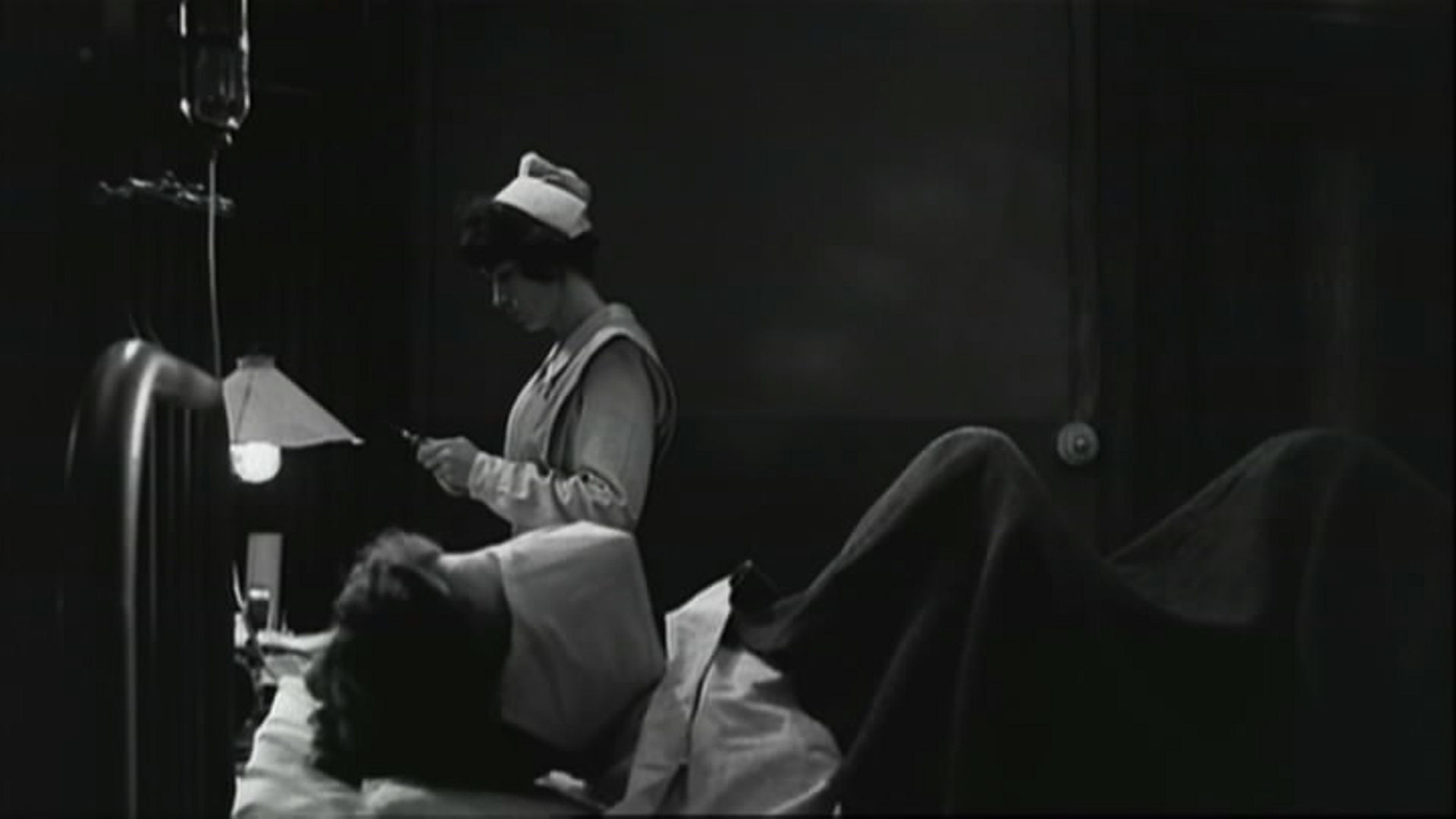
Uniquely, the film is split into two differing visual styles that it switches between, the black-and-white of the hospitalised and mangled Joe, and the colour-filled world of his memories and dreams. Though the latter does also appear saturated and at times employs a significant blur around the edge of screen. Within the Hospitalised Joe moments, his minds voice is often heard overlapping the dialogue that is happening outside of his mind, most notably in the early scene where he discovers having lost his legs while doctors discuss his injuries and treatment. The clinical discussion between doctors in the foreground of the shot dominates the screen space, but the bed-ridden Joe is completely visible in the background, and all the while he is screaming and moaning, and they are oblivious to each other. The doctors allow him to live in order to study, a conclusion Joe also makes with a fantasy involving a cameo from the director himself.


The film is rife with long, singular takes that emphasise intimacy and discomfort in a film already full of intense emotion, many of them between Joe and the near-mute nurse who takes tender care for him. These moments are tender and poignant, often being a more positive sadness to the films otherwise bleak hopelessness  By direct contrast, there is one segment that shows how Joe comes to perceive time, where a years passes within a full minute of jump cuts and wildly different angles. This effort works in tandem with the hard cuts between dream and reality to create a sense of empathy between the audience and such an unimaginable situation. The editing of the films dreams and memory sequences allows for sound and image to bleed between opposing fantasies, and the film alternates between jump cuts and fades as it follows Joe's stream of consciousness. Sometimes the dreams come fast and obvious, other times more subtle, and the rat nightmare is a significant example of this. And further along, these get stranger and more surreal as Joe begins a descent into madness.

Joe Bonham as a character is meant to embody the Everyman's Son and also Trumbo's own experiences growing up in the turn of the century. As the film and book are both dominantly anti-war texts, they also touch on the spirit of class-ism, pastoralism versus modernism, within that period of history. The Bonham's move from Colorado to LA being a significant part of that, and it is often and loudly remarked on by Joe's father. Joe revers his father immensely, and even turns to him as he does Christ to help him with his situation, and his father often discusses with Joe about such concepts as democracy and capitalism. Early on he states that "For democracy, any man would give up his only begotten son." The film's title is a response to a popular recruiting song that contained a refrain stating "Johnny, get your gun!" But on the subject of the politics of the film, Trumbo stated that " I've tended more to center on the young man, the soldier, and let you draw your own conclusions about the system that put him where he was." But it is impossible to deny the staunch anti-war stance the film takes.

Johnny Got His Gun is a uniquely terrifying film, whose premise and source material seemed difficult, almost impossible to adapt into a film. The decisions made in the area of direction and editing are brilliant, with the contrast between the world of reality and the mind being so deliberately contrasted, but often they still can melt into one another. The way the camera moves with the actors, stays in one space, cuts, or even doesn't cut, is just brilliant. Trumbo was known as a brilliant screenwriter, and he also holds Johnny as "...obviously the best thing I've ever done maybe the one good thing I've done..." While strange, the direction for the actors to portray their characters with often restrained emotions and some with an odd cadence actually intensifies the idea of these people being from another time. Perhaps that makes the content even more horrific. The score is often sparse, dark and military, though with brief moments of soaring orchestration.

Trumbo's own adaptation differs vastly from his own book, which was written as a stream of consciousness entirely from Joe's own perspective and without any of the hospital scenes from beyond Joe's perspective. Trumbo has stated before that he was even investigated by the FBI based on his ideas and the novel, which he refused to continue to publish during World War 2. The novel also went on to become a personal favourite of Ron Kovic, the man who was Born on the Fourth of July. Donald Sutherland, a prominent anti-war campaigner who wanted to "Free or Fuck the Army" around the time the film was made, also felt highly about Trumbo's novel.

The film does end on a horrifically sad note, though Trumbo uses the last frame before the credits to make a sobering and sarcastic comment about the results of war in the 20th Century. In bold red typewriter font it says "War Dead since 1920: Over 80,000,000 Missing or Injured Casualties since 1920: Over 150, 000, 000 Dulce Et Decorum Est Pro Patria Mori". The latin translates to "It is sweet and right to die for one's country" and was most famously used in the 20th Century in the poem by the same name by Wilfred Owen. 

The rights to Johnny Got His Gun are now owned by the thrash metal giants Metallica after the book and film inspired their 1989 song One  and clips from the film were used in the music video. The band purchased the rights to avoid having to constantly have to pay royalties for using the footage.

Wednesday, 3 December 2014

War Movie Month: Born on the Fourth of July (1989)

The second film in Oliver Stone's trilogy of Vietnam War films focuses more on the rhetoric of why and how people get caught up in fighting them and the affects that this fighting has. Not only on the mind, but the body too.

Ron Kovic (Tom Cruise) is a teenager who grew up in a small town in Long Island. After seeing JFK's "Ask not what your country can do" speech as a young boy, he has grown up with an intense love for his country. As soon as he is able to do so, Ron joins the Marines and is shipped off to fight in Vietnam, where he is made a paraplegic from being shot in the neck. Once he returns home, he realises that not everyone the same die hard patriotism.

While this is far from being a great movie (I have some minor problems with its pacing), Stone does make a great statement about how young men get caught up in the fervour of war. Kovic grew up with the patriotism that pervaded Cold War-era America and after hearing the tales of his father and how the indoctrination of "The Greatest Generation" being so because they fought in the Second World War, it only makes sense that he wishes to enlist in the Marines and fight for his country. It is only after he is severely injured that he comes to realise that the Vietnam War was a wrong war to be fighting.

This movie has some extraordinary performances, but the majority of the movie is dominated by one. Cruise's Kovic is scarred by things that he did during the war and spends most of his time trying to atone for these things, but is ultimately unable to find peace. Willem Dafoe is quite extraordinary as a creepy wheelchair-bound vet that Ron meets in Mexico. The standout performance for me has always been Raymond J. Barry as Ron's father, who makes me cry without a doubt every time.

The soundtrack to this movie is probably the best part. Despite the best efforts to try and make "Moon River" the theme song (complete with a creepy drunken Tom Cruise rendition), The Temptations "My Girl" does a much better job at capturing the sound of the era. This is backed up by a great score from John Williams that follows the highs and lows of the film.

Verdict: A captivating film about the effects that war has on the people who fight in it. 
Jasper Roberts Consulting - Widget