Showing posts with label Donald Sutherland. Show all posts

Friday, 20 November 2015

The Hunger Games: Mockingjay - Part 2

The Hunger Games is one of those series that I never really give any thought towards until the next film comes around, and apparently it’s been a year since Mockingjay - Part 1. Francis Lawrence - who has directed all but the first of the films – has returned to wrap-up the young-adult series with Mockingjay - Part 2

The nation of Panem is now in the midst of a civil war, with the rebels led by President Coin (Julianne Moore) looking to assassinate President Snow (Donald Sutherland) and unify the districts. Katniss (Jennifer Lawrence) is recovering from the injuries that Peeta (Josh Hutcherson) has caused her and their relationship is in turmoil as he becomes more and more unstable. The time has come to take down President Snow, with the rebels planning to film Katniss assassinating him as the ultimate piece of propaganda. 

Traversing through the Capitol to reach the palace is a challenge. Snow has evacuated the perimeter and transformed it into a sadistic minefield of unique ways to die. Katniss and the District 13 unit undertake the challenging mission with her friends Gale (Liam Hemsworth), Finnick (Sam Claflin) and Cressida (Natalie Dormer), who is to direct the propaganda piece. This is their best chance to take down Snow’s regime, but it’s certainly no easy task. 

There are some interesting side-stories in Part 2 that jazz up the arcs of the various characters - such as Peeta’s inability to control himself at points due to the Capitol's brainwashing, and Finnick’s marriage which gives his character more of a reason to fight for Panem’s freedom - and this is essentially still an ensemble film, however the ‘will they, won’t they, and with whom?’ love triangle between, Katniss, Peeta and Gale is beginning to wear extremely thin, and is resolved in both an expected and confusing way. The same can be said for most of the film, it reaches the point that you knew it would, but in a convoluted and stretched-out manner. Most of the film feels like a montage and is at times, difficult to follow. They could have had about five end-points before they finally finish with such an overly-sentimental, unnecessary scene that it actually detracts from the quality of the film. It’s as if the producers were desperately trying to hold on to the only half-decent Young Adult film series they have. 

On top of this there are plot-holes and timing issues that quite noticeably screw with the sense of immersion. For example at the beginning of the film, following on from the injuries she sustained at the end of the last, Katniss is almost completely unable to speak. However, no more than five minutes later, she’s up and having a healthy conversation with President Coin and Plutarch - the last filmic appearance of the late Philip Seymour Hoffman and a reminder that this movie was (largely) filmed years ago, at the same time as Part 1. Perhaps that’s why it feels so rushed. It’s uncertain how much time is passing throughout Mockingjay - Part 2, and that removes much of the tension that it works so needlessly to build up. 


To redeem itself from some of these issues, Mockingjay - Part 2 does have some pretty intense fight sequences, including a weird hot-oil chase and a sewer-system scene which is either a homage or a shameless rip-off of Aliens, depending on how you view it. The concept of President Snow evacuating the outskirts of the Capitol and filling the streets with a system of eloquent booby-traps is a pretty cool idea, but it does feel a bit-too much like it’s YA competitor The Maze Runner - perhaps it’s a big F-You from the author, Suzanne Collins to Maze Runner’s James Dashner. 

Past issues with the characters again crop-up again here, with Natalie Dormer’s Cressida as annoying as ever, Woody Harrelson barely making an appearance, and Moore’s President Coin a bland mirror of Snow, preaching a distorted view of what ultimately becomes the same ideology. President Snow is still pretty much the only likable character for me, with his eccentric bond-villian persona the guilty pleasure of the series, played expertly by the great Donald Sutherland. Although I must say Katniss is suitably badass for such a finale. Ultimately though I care about as much for the characters as I do for the world that they inhabit. 

For an impartial-viewer, The Hunger Games: Mockingjay Part 2 is a relatively satisfying, albeit overly long and convoluted conclusion to a series that’s never particularly gelled with me. It has its issues but keeps your attention fairly well. If you’re a massive fan, I can’t speak for how much you’ll enjoy it, but it’s certainly worth a watch even if only to serve as a catharsis for the many hours you’ve already spent delving into this series.

Monday, 8 December 2014

War Movie Month: The Dirty Dozen (1967)


A rag-tag assortment of thugs, fuck-ups and ne'er-do-wells are united under the guidance of a blunt and beaten down authority figure to overcome both a monumentous task and the scorn oftheir superiors. Does this remind you of anything?

By many of today's standards Robert Aldrich's The Dirty Dozen is an unimpressive movie. But it is the progenitor of near innumerable tropes and a legacy of on-screen violence and brutality, and yet is often a charming and light-hearted military affair. Lee Marvin leads an ensemble cast as Major Reisman, a blunt, crass and smart-mouthed US Army officer who is the bane of his superiors, most specifically Colonel Breed, and thus is ordered to train and lead a squad of death-row military prisoners to crash a party full of Nazi officers in the lead-up to the June 4th invasion of Nazi-occupied France. Apart from Marvin, the film stars Ernest Borgnine (who stars in the Western anti-hero ensemble The Wild Bunch 2 years after this film), Donald Sutherland, Charles Bronson, George Kennedy, John Cassavettes and Jim Brown. The vast majority of the plot is devoted to Marvin training the Dozen and surreptitiously turning them from a "group of individualists" into a unified fighting unit, then proving their worth on the battlefield to their superior officers, before finally undertaking the mission. Suffice it to say, there is a scarcely any plot present in a 143-minute film.


The training scenes, shenanigans and war-games exercises not only contrast greatly from the third act mission in terms of tone, but in film-making craft as well. The earlier scenes are peppered with un-exciting, though unquestionably solid camera-work and editing, whereas the finale often falters with notable production problems that result in clunky edits and character actions. The off-screen death of the character of Jimenez, played by popular singer and friend of Frank Sinatra, Trini Lopez, was the result of him leaving the production once it had gone over schedule.


The first three-quarters of the Dirty Dozen are peppered with humour, character and wit, whether that is shown through the mocking of officers or the dynamic of the prisoners. Often the officers are shown as goofs and the prisoners as sadists, but this is also reversed. Reisman often employs the men's own distrust and dislike of authority to bind them together, eventually forming an effective and unorthodox unit. It's this aspect of the story that is both the most engaging and the most copied. Films such as the Wild Bunch, Major Payne, Bad News Bears, Guardians of the Galaxy, and many others are based on this simple premise and narrative structure. The Dirty Dozen is also a favourite of Quentin Tarantino's and thus is certainly an inspiration for Inglorious Basterds. And like Basterds, this is also a fictionalised version of accounts, though potentially based on a real-life squad of demolotionists, branded the "Filthy Thirteen".


In the film's finale, several characters take a turn. The most notable turn involves the most unsavoury character in the troupe, the misogynist religious maniac Maggott who betrays the team to murder a German officer's wife in a fit of madness. But, soon after, Reisman and his men trap the guests of the party, Nazi officers and several civilians, in a bomb shelter and proceed to pour grenades and petrol down the air vents with a mind to burn them alive. The unexpected malice of this act, as well as the terrified screams and attempts to stem the tide of petrol and explosives, and slightly preceeding a violent gun-battle, is nothing short of shocking, bordering on bewildering. There'd been no level of violence even remotely close to this before, and several of the acts can be seen as nothing short of sadistic, with little indication of particular sadism towards Nazi's by the Dozen. But by far, the most egregious error of the film is the ending. After defeating the enemy and leaving the compund, three of the surviving members are suddenly teleported by way of cross-dissolve into an unspecified hostpital room, where their superior congratulates them and invites them to rejoin the effort, and then the film ends with a brief credits sequence/memoriam for the Dozen. This sequence is as brief as it is sudden and wholly obtrusive into the film.


"You've seen a general inspecting troops before, haven't you? Just walk slow, act dumb and look stupid!"


The Dirty Dozen is certainly an entertaining, over-masculine war-time romp, that involves little thought but results in a lot of laughs. While the massacre at the end is against tone and suffers from poor editing, it is certainly a sight to behold and the film ends with a bang after plenty of laughs with a diverse and entertaining cast.

Thursday, 4 December 2014

War Movie Month: Johnny Got His Gun (1972)

"I don't know whether I'm alive and dreaming or dead and remembering."

A young man is left nearly senseless, without eyes, ears, nose, mouth, arms or legs. Unable to perceive the difference between memory, dream and reality. His body lives on while his mind is trapped within it. This is the horrific situation that Joe Bonham lives in Johnny Got His Gun, the directorial debut of Academy Award and National Book Prize-winning author, screenwriter and member of the famous Hollywood Ten, Dalton Trumbo (Spartacus, Papillion, The Brave One, Roman Holiday).

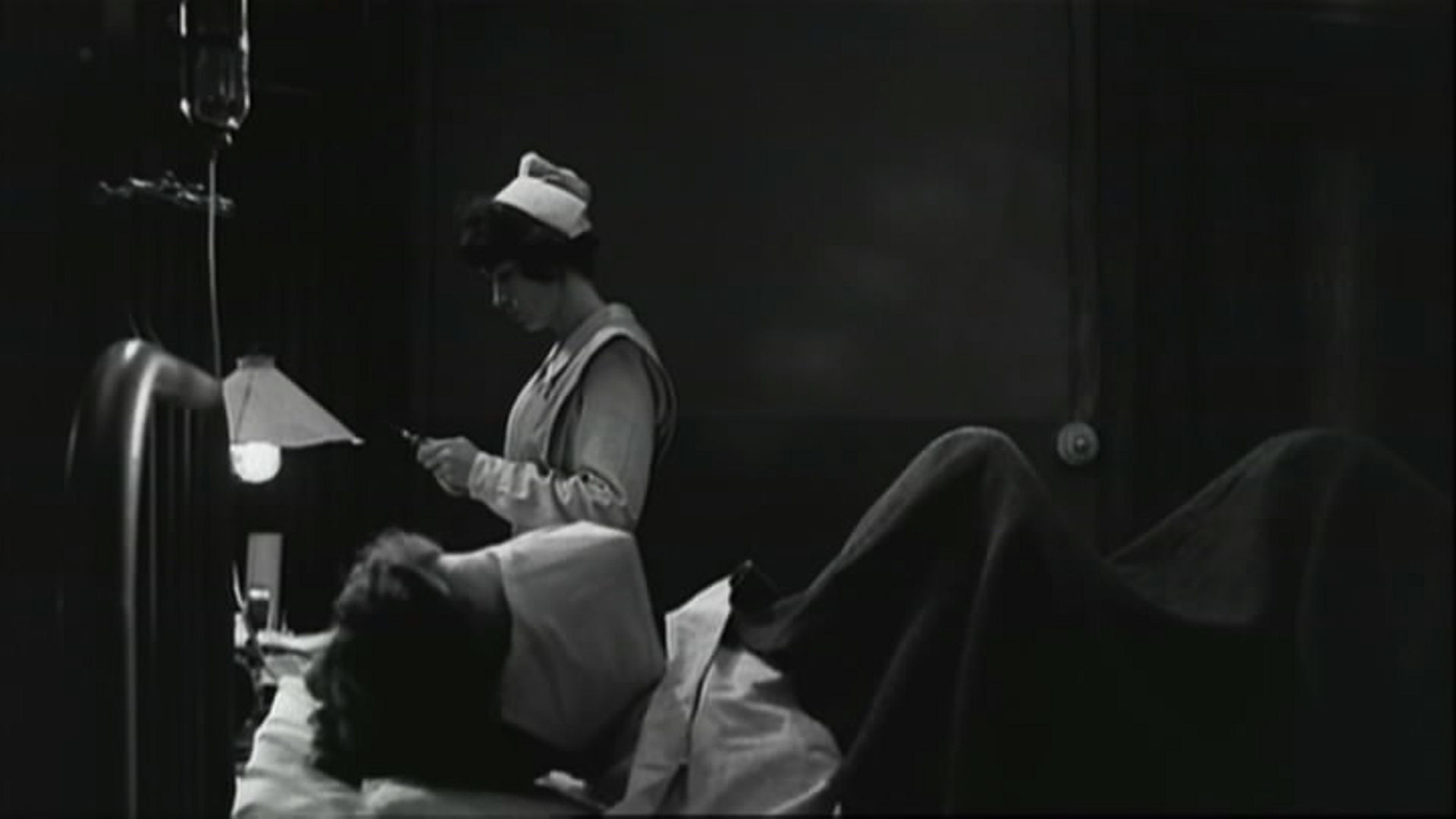
Adapted from his own pre-World War 2 book Trumbo made this film during the height of the war in Vietnam. Joe is hit by an artillery shell while taking cover in a crater in the middle of No-Mans Land, and is left deformed. He is treated by surgeons who decree that he has been "de-cerebrated" and his madulla oblongata, which controls one's breathing, is the only part of his brain to survive. In their words, "he will be as unthinking and unfeeling as the Dead until the day he joins them." Joe later refers to himself as a "piece of meat that keeps on living." Joe soon wakes and slowly becomes aware of his state of being, he is beyond traumatised. As years pass, he constantly slips between memories of his childhood and life, dreams of what he can become in his present state, and fantasies wherein he speaks to his father, his lover Kareen and Jesus Christ about his predicament, all while slipping in and out of reality. Timothy Bottoms (Invaders from Mars, The Last Picture Show) plays Joe, Jason Robards (Once Upon a Time in the West, All the President's Men, Tora! Tora! Tora!) his father, Kathy Fields (The Towering Inferno) as his lover Kareen, and Donald Sutherland as Jesus Christ.


Uniquely, the film is split into two differing visual styles that it switches between, the black-and-white of the hospitalised and mangled Joe, and the colour-filled world of his memories and dreams. Though the latter does also appear saturated and at times employs a significant blur around the edge of screen. Within the Hospitalised Joe moments, his minds voice is often heard overlapping the dialogue that is happening outside of his mind, most notably in the early scene where he discovers having lost his legs while doctors discuss his injuries and treatment. The clinical discussion between doctors in the foreground of the shot dominates the screen space, but the bed-ridden Joe is completely visible in the background, and all the while he is screaming and moaning, and they are oblivious to each other. The doctors allow him to live in order to study, a conclusion Joe also makes with a fantasy involving a cameo from the director himself.


The film is rife with long, singular takes that emphasise intimacy and discomfort in a film already full of intense emotion, many of them between Joe and the near-mute nurse who takes tender care for him. These moments are tender and poignant, often being a more positive sadness to the films otherwise bleak hopelessness  By direct contrast, there is one segment that shows how Joe comes to perceive time, where a years passes within a full minute of jump cuts and wildly different angles. This effort works in tandem with the hard cuts between dream and reality to create a sense of empathy between the audience and such an unimaginable situation. The editing of the films dreams and memory sequences allows for sound and image to bleed between opposing fantasies, and the film alternates between jump cuts and fades as it follows Joe's stream of consciousness. Sometimes the dreams come fast and obvious, other times more subtle, and the rat nightmare is a significant example of this. And further along, these get stranger and more surreal as Joe begins a descent into madness.

Joe Bonham as a character is meant to embody the Everyman's Son and also Trumbo's own experiences growing up in the turn of the century. As the film and book are both dominantly anti-war texts, they also touch on the spirit of class-ism, pastoralism versus modernism, within that period of history. The Bonham's move from Colorado to LA being a significant part of that, and it is often and loudly remarked on by Joe's father. Joe revers his father immensely, and even turns to him as he does Christ to help him with his situation, and his father often discusses with Joe about such concepts as democracy and capitalism. Early on he states that "For democracy, any man would give up his only begotten son." The film's title is a response to a popular recruiting song that contained a refrain stating "Johnny, get your gun!" But on the subject of the politics of the film, Trumbo stated that " I've tended more to center on the young man, the soldier, and let you draw your own conclusions about the system that put him where he was." But it is impossible to deny the staunch anti-war stance the film takes.

Johnny Got His Gun is a uniquely terrifying film, whose premise and source material seemed difficult, almost impossible to adapt into a film. The decisions made in the area of direction and editing are brilliant, with the contrast between the world of reality and the mind being so deliberately contrasted, but often they still can melt into one another. The way the camera moves with the actors, stays in one space, cuts, or even doesn't cut, is just brilliant. Trumbo was known as a brilliant screenwriter, and he also holds Johnny as "...obviously the best thing I've ever done maybe the one good thing I've done..." While strange, the direction for the actors to portray their characters with often restrained emotions and some with an odd cadence actually intensifies the idea of these people being from another time. Perhaps that makes the content even more horrific. The score is often sparse, dark and military, though with brief moments of soaring orchestration.

Trumbo's own adaptation differs vastly from his own book, which was written as a stream of consciousness entirely from Joe's own perspective and without any of the hospital scenes from beyond Joe's perspective. Trumbo has stated before that he was even investigated by the FBI based on his ideas and the novel, which he refused to continue to publish during World War 2. The novel also went on to become a personal favourite of Ron Kovic, the man who was Born on the Fourth of July. Donald Sutherland, a prominent anti-war campaigner who wanted to "Free or Fuck the Army" around the time the film was made, also felt highly about Trumbo's novel.

The film does end on a horrifically sad note, though Trumbo uses the last frame before the credits to make a sobering and sarcastic comment about the results of war in the 20th Century. In bold red typewriter font it says "War Dead since 1920: Over 80,000,000 Missing or Injured Casualties since 1920: Over 150, 000, 000 Dulce Et Decorum Est Pro Patria Mori". The latin translates to "It is sweet and right to die for one's country" and was most famously used in the 20th Century in the poem by the same name by Wilfred Owen. 

The rights to Johnny Got His Gun are now owned by the thrash metal giants Metallica after the book and film inspired their 1989 song One  and clips from the film were used in the music video. The band purchased the rights to avoid having to constantly have to pay royalties for using the footage.

Thursday, 20 November 2014

The Hunger Games: Mockingjay - Part 1

I've never been much of a fan of the Hunger Games series, or indeed any of the many teenage dystopic films, apart from perhaps The Maze Runner. So walking into the latest instalment, Mockingjay - Part 1 I was a bit hesitant. So, does Part 1 continue in the Battle Royale-esque manner of the first two?

After Katniss (Jennifer Lawrence) destroys the arena, Plutarch (Philip Seymour Hoffman) takes her to District 13, an underground embattlement where she meets President Coin (Julianne Moore). Coin persuades Katniss to become their Mockingjay, a symbol of revolution that will boost the uproar against the Capitol. They design a series of propaganda videos to spread the word, but Haymitch (Woody Harrelson) quite rightly suggests that she needs to send her message from the battlefield for it to have influence.

Armed with a film crew, directed by Cressida (Natalie Dormer), Katinss visits a district that has just survived a vicious bombing raid by the Captiol, to see if she can capture both the atrocities of the Capitol, and the spirit of the survivors, in the hope of fanning the flames of revolution. Whilst at the same time, she remains concerned about the state of Peeta (Josh Hutcherson) and his existence within the Capitol.

With Francis Lawrence (I Am Legend, Water for Elephants) reprising directorial control after the success of Catching Fire, the film takes a while to gain momentum, only really finding its stride by the second half. The story of Mockingjay seems much more focused on the political manoeuvres occurring in this Orwellian society and is clearly building up for Part 2, the final instalment in the series. Nevertheless, I was far more absorbed here than I was in the previous two films and for the first real time in the series, I'm actually interested in where it's going. I just wish the first half of this film was as good as the second.

I've never been able to understand how The Hunger Games gets such a vast array of superb actors on-board (Spoiler Alert: It's probably money) and generally they all provide decent if (certainly) not career-peaking performances. Jennifer Lawrence maintains the strong yet troubled nature of Katniss, with both Liam Hemsworth and Hutcherson supporting her well. The late Philip Seymour Hoffman is gentle and sympathetic as Plutarch and Woody Harrelson as Haymitch is still the lovable jackass that he was in the first instalments. Although Julianne Moore is less than stellar, mainly because President Coin is such a bland character, and Natalie Dormer seems to play the same smirking egotist that she does in most her roles, although I suppose it works quite well when playing a director.

Whilst for the first half, Part 1 fails to move away from the stock-standard 1984 dystopia that we've seen many times before, it flourishes more as it moves on, supported by a great cast and a handful of action scenes for good measure.


Jasper Roberts Consulting - Widget